
What is spray foam insulation?
Spray foam insulation is a type of insulation that is misted onto a surface as a liquid and then expands to form solid foam. When the foam ingredients mix as they are sprayed, they react with each other and expand to create the finished layer of insulation. This insulation has a number of benefits over traditional methods, including being more energy efficient, providing better soundproofing, and creating an air-tight seal that helps prevent drafts. And because it can be sprayed onto any surface, spray foam insulation is also an excellent choice for oddly shaped spaces or hard-to-reach areas.
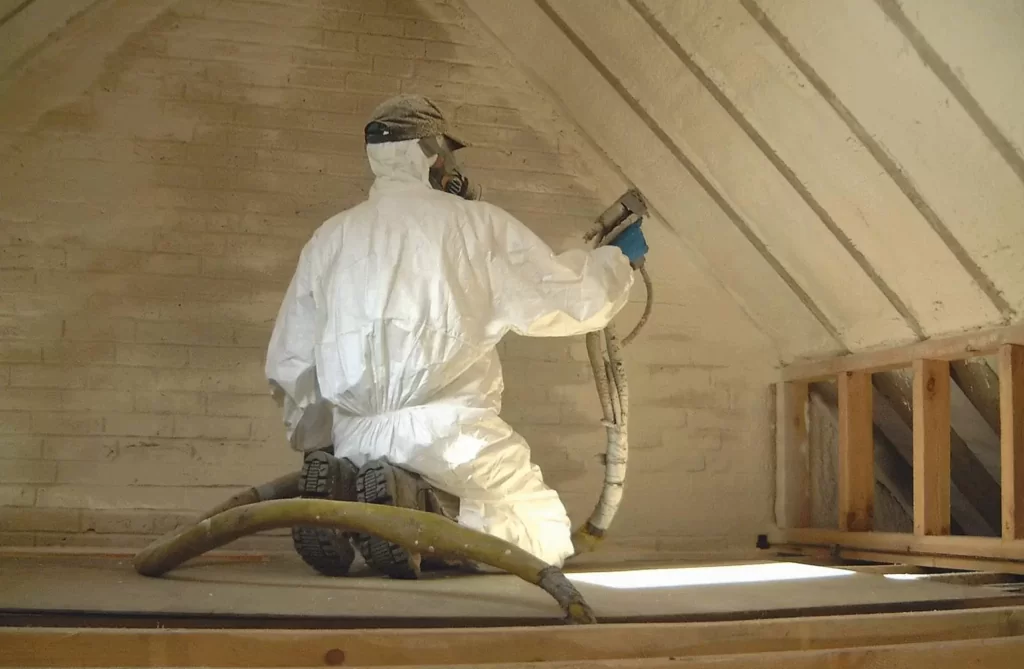
Isothane designs and manufactures a wide range of unique closed and open cell spray foam insulation products, perfect for domestic, commercial, and industrial use. Our spray foam insulation solutions are polyurethane and a blend of other premium components, such as flame retardants, depending on the desired function and application of the foam. Our spray foam insulation products are designed to help customers save energy, reduce costs, and achieve greater comfort.
What is spray foam used for?
Spray foam insulation is used in many different applications. It can be used to insulate walls, ceilings, and floors as part of a new property build. It can also be used to fill in gaps and cracks when renovating an existing building, preventing drafts, reducing heat loss by creating an insulating layer and saving energy. Spray foam insulation mixture expands and hardens once it is applied, creating an effective seal that is both airtight and water-resistant. This makes it an ideal choice for places where humidity and moisture levels are high, such as basements and bathrooms.
Benefits of Spray Foam Insulation
Unlike other insulation solutions and materials, spray foam insulation does not settle over time, so it can maintain its thermal efficiency for the lifespan of the building. This unique benefit means that spray foam insulation has become one of the most popular types of insulation on the market. Some of the many other benefits of spray foam insulation include:
Energy efficient: spray foam insulation is an excellent investment for any home or business owner who wants to improve the energy efficiency of their property, reducing air leaks and heat loss.
Reduces sound: spray foam insulation creates a sound-absorbing layer, making it an efficient way to reduce noise levels and create a more comfortable environment.
Strengthens buildings: spray foam insulation is an effective way to improve the safety and stability of buildings. When spray foam insulation is applied to a surface, it forms a strong bond with the material. This bond can help to reinforce the material, making it less likely to warp or break under stress. In addition, spray foam insulation can help to fill in cracks and gaps, further reducing the potential for structural damage.
Long lasting: spray foam insulation can last for decades – in most cases the lifespan of a building – without needing to be replaced, making it a very cost-effective and low-maintenance investment.
Environmentally friendly: as well as the thermally efficient properties, spray foam insulation provides an environmentally friendly solution because it does not contain any toxic chemicals or Volatile Organic Compounds (VOCs).
Deters moisture: spray foam forms a barrier that prevents moisture from entering a property or forming in a cavity. This can help to prevent mould and mildew growth and promote thermal regulation.
Improves indoor air quality: open cell spray foam insulation helps reduce dust and allergens to improve indoor air quality in your home or workplace.
Open and Closed Cell Spray Foam Insulation
Spray foam insulation can be either one of two varieties: open cell or closed cell. Closed cell spray foam is more effective at preventing heat transfer in and out of a property and has a higher density that provides additional structural support. As well as offering excellent thermal qualities and strength, the closed cell structure allows these types of foams to be waterproof, making them ideal for use in areas prone to both flooding and wind-driven rain.
Open cell spray foam insulation is slightly less dense than closed cell foams and is often used to insulate attics, floors, and walls. Open-cell spray foam insulation also offers excellent thermal properties, but it is more flexible than its closed-cell counterpart; this makes it particularly suitable for places where movement or vibration can occur
Open cell spray foams are more lightweight and flexible, making them less expensive and easier to apply. The flexibility of open cell spray foam makes it particularly suitable for places where movement or vibration is a factor. The open cell structure enables these types of foam to expand to up to 100x their size as they dry, making them ideal for filling hard-to-reach places and awkward crevices. As well as minimising heat loss and preventing drafts, open cell spray foam offers fantastic noise deadening qualities for airborne sound.
Polyurethane Spray Foam
Spray foam is made from organic polymers called polyurethane. Polyurethane spray foam is a two-part mixture made up of polyol resin blend and isocyanate that react and expand when combined. This type of insulation is one of the most popular types on the market as it offers excellent thermal properties, sound reduction, and strength.
Polyurethane spray foam has a smaller carbon footprint than most other insulation products available. The blowing agents used in our foam does not contain any ozone-depleting substances, making it a safe and environmentally friendly choice. The polyurethane spray foam components are made from renewable sources and last for decades without breaking down, making it an environmentally friendly insulation option.
What can spray foam be used for?
Spray Foam Roof Insulation: Your roof is one of the main places that heat escapes from, so proper insulation is a must. Spray foam roof insulation is a fantastic solution for preventing heat loss and reducing energy costs. It is sprayed on in liquid form and expands to fill the gaps between roofing components, creating an insulating layer that is extremely resistant to air infiltration. Spray foam also provides an effective vapour barrier, blocking moisture from entering through the roof.
Spray Foam Loft Insulation: Filling your loft with traditional forms of insulation means the space can no longer be easily used as a living space and can be difficult to access. However, spray foam makes it possible to keep your loft as a usable space while still providing superior insulation. It also won’t settle over time like some other forms of insulation, so there’s no need to worry about effectiveness diminishing over time. Just a few millimetres of spray foam insulation is enough to provide effective loft insulation.
Spray Foam Cavity Wall Insulation: Spray foam is a popular and effective way to insulate cavity walls. When the internal temperature of your property is warmer than that outside, particularly during winter months, heat often escapes through the walls. Spray foam insulation prevents this, maintaining the heat within your home. Spray foam can be injected into cavity walls to provide a better seal than traditional insulation materials, reducing air infiltration and preventing heat loss.
Domestic Spray Foam Insulation
Spray foam insulation is a great way to insulate your home and make an existing property more energy efficient. It is often used to insulate attics, walls, basements, and under-floor voids because it has a high thermal conductivity or Lambda value, meaning it is very effective at preventing heat transfer. Spray foam insulation is also airtight, which helps to prevent drafts and air leaks.
Sprayed into place using a special applicator, spray foam expands and hardens, filling a cavity and creating an airtight seal to prevent heat loss, making it an effective way to insulate cavity walls. Spray foam insulation is also resistant to moisture, mould, and mildew, making it an ideal choice for use in humid climates or areas prone to flooding and excess rain. Overall, spray foam insulation is an extremely versatile product that can be used to insulate domestic buildings of all shapes and sizes.
Commercial Spray Foam Insulation
Spray foam insulation is one of the most popular choices for commercial and industrial applications. It provides superior insulation performance and can be used in a variety of settings, including office buildings and warehouses. Spray foam insulation is also an excellent choice for protecting against noise pollution and is commonly used to insulate HVAC ductwork and create soundproofing barriers between rooms. In addition, spray foam insulation can help to regulate indoor temperature, helping to improve the energy efficiency of a building and minimising heating costs.
Spray foam can also be used in the construction of cold-storage units and freezer rooms, providing insulation from extreme temperatures. It offers superior insulation performance, as well as being airtight, watertight and impervious to the growth of mould and mildew.
When selecting spray foam insulation for a commercial project, it is important to consider the specific needs of the building and choose a product that will provide the best possible performance, which our expert team can advise on. Our network of commercial spray foam installers can advise on the best type of insulation for your project and ensure a safe, effective, and durable installation.
Isothane Spray Foam Insulation Formulations
Isothane has been a leading manufacturer and installer of spray foam insulation for over 25 years and is proud to be at the forefront of this high-tech industry. We have garnered a wealth of experience and knowledge over the decades, which enables us to provide innovative solutions to our clients.
Our spray foam products are highly adaptable and can be used on a variety of challenging projects, both domestically and commercially. Our formulations are rigorously tested to ensure they meet the highest standards, and we work strategically with our partners to ensure that our products are constantly being reviewed and improved to benefit from the latest advances in technology.
We can offer a full suite of services to our clients, from consultancy to expert spray foam installation. We pride ourselves on providing superior quality products at competitive prices and are committed to delivering outstanding service every time.
Duratherm ®
Duratherm ® is Isothane’s KIWA-approved closed cell spray foam product. Suitable for insulation purposes in a variety of different properties and structures, Duratherm ® is particularly appropriate for roof stabilisation and the reduction of air leakage. It is a closed cell spray foam product with high-performance levels, offering a robust solution for a wide range of insulation projects.
Duratherm® spray foam is ideal for:
- Retrofit insulation / stabilisation for roofs
- New build insulation
- Loft conversion insulation
- Commercial building insulation
Duratherm® can be used to:
- upgrade the thermal performance of roofs, floors, or walls
- meet current building regulations
AGRISPRAY® OS
AGRISPRAY® OS is an HCFC and CFC-free rigid spray foam system with exceptionally good compressive strength. It is an ideal choice for all types of insulation projects, especially in cold-storage, refrigeration, and freezer units. AGRISPRAY® OS also offers superior fire resistance and is suitable for use in residential homes, as well as a range of commercial properties.
AGRISPRAY® OS spray foam is used for insulating:
- Exterior or interior of agricultural buildings
- Internal industrial roofing
- Domestic slate or tiled roofs
The benefits of the AGRISPRAY® OS spray foam system include:
- rapid installation with no mechanical fixings
- effective high insulation values
- excellent adhesion to any surface
- can save up to 75% of your energy costs
- fire rated to BS476 Part 7: Class 1
- provides excellent structural stabilisation
PIRTHANE® 0
PIRTHANE® 0 is a spray foam system with excellent fire-resistant properties and low thermal conductivity. It has a Class 1 surface spread of flame when tested to BS476 Part 7 1997; when tested to BS476 Part 6 1989 the material achieved a fire propagation index (I) of not more than 12 and subindex (i1) of not more than 6.
PIRTHANE® 0 spray foam is used for:
- Thermal insulation and condensation control
- Insulating concrete soffits or floor slabs
- Interior of commercial buildings
The benefits of the PIRTHANE® 0 spray foam system include:
- Excellent fire-resistant properties
- Low thermal conductivity
- Lightweight – typically 2.5kg/m² for 0.45W/m²K U-Value
- Excellent for complex surface structures
- Excellent adhesive properties
- Withstands high wind speeds and vibration
Accredited Spray Foam Insulation Installers
Isothane adheres to essential industry best practices, and we abide by a comprehensive set of procedures and controls to ensure that our products and services meet the highest standards of quality. We are ISO9001 (quality control management), ISO14001 (environmental management) and ISO18001 (occupational health and safety) accredited and RoSPA members. As a result of our commitment to quality, safety, and environmentally conscious solutions, we offer our customers excellent service and technical support, along with spray foam insulation products that meet the highest standards.
Spray Foam Installation Process
The first step in applying spray foam to any commercial or residential property is to assess the space and identify what type of foam insulation is best suited to the job. An Isothane-accredited spray foam installer will conduct a detailed survey and evaluation, and then recommend the appropriate spray foam products and application methods for the job. The next step is to carry out a detailed risk assessment and risk management plan, ensuring that all safety measures are in place prior to any work commencing.
Once the installation begins, our accredited installers will apply the spray foam products to the required area with precision and accuracy. We use a range of specialised equipment to apply our spray foam products, including airless sprayers, air-assisted sprayers, and mobile rigs. They will then focus on ensuring consistent coverage and finish across all surfaces while adhering to relevant building regulations or industry standards.
After the spray foam is applied, our installers will ensure that all safety protocols are adhered to while they perform post-application checks. This includes conducting visual inspections and performing a fire test, as well as providing comprehensive documentation for the project upon completion. We also offer on-site technical support and advice, allowing our customers to get the most out of their spray foam insulation system.
Finally, they will provide post-installation support and advice, helping you achieve optimum results and ensuring that your spray foam insulation system continues to function at its best. All our installers are highly experienced in the installation and maintenance of spray foam systems, so you can rest assured knowing that your project is in safe hands.
Nationwide Network of Approved Spray Foam Insulation Installers
Our nationwide network of approved spray foam installers is highly trained by our in-house technical team and experienced in installing spray foam insulation across a diverse range of commercial and residential applications. We only work with trusted installers who meet our high standards for quality and customer service, and we support them with ongoing training and technical expertise.
Whether you are looking for insulation for a new building or retrofitting an existing structure, Isothane can provide the perfect spray foam solution. Our team of experts is on hand to guide you through every step of the process and ensure that your project is completed on time and to the highest standards. Contact us today to discuss your requirements or to find an approved spray foam installer in your area.